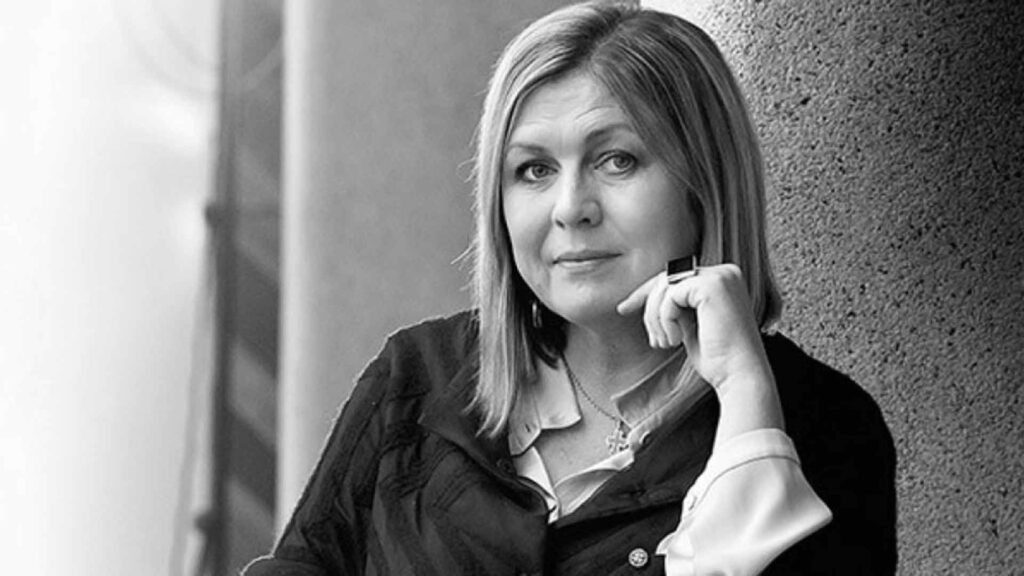
Bestselling Latvian author Nora Ikstena has died aged 56 after a serious illness, her relatives confirmed to Latvian public media.
Stella Sabin, Ikstena’s English language editor and Co-Publisher at Peirene Press, said:
We were deeply saddened to hear of Nora Ikstena’s passing. Her novel Soviet Milk is a modern classic – an intimate yet expansive work that has touched readers around the world. It was a privilege to work with Nora, whose insight and generosity shaped every stage of the publishing process. We had already been planning a reissue of Soviet Milk in July 2026 to mark the tenth anniversary of its original publication. It is a great sadness that Nora will not be here to see it, but we are grateful that future readers will continue to discover and engage with this extraordinary work.
Nora Ikstena (1969–2026) was born in Riga. She studied at the University of Latvia before moving to New York to study at Columbia. On her return to the Baltics she helped establish the Latvian Literature Centre. A prolific author of fiction, non-fiction, essays, and short stories, she is best known for her novel Soviet Milk, which won the Latvian Literature Award and was nominated for both the EBRD Prize and the Republic of Consciousness Prize in 2019. An international bestseller, the novel has been translated into more than 25 languages and was adapted for cinema and theatre. Her honours include the Baltic Assembly Award and Latvia’s Three Star Order.
Soviet Milk
Spanning fifty years in the life of a nation, from the end of World War Two to the fall of the Berlin wall, Soviet Milk gives voice to a Latvian mother and daughter swept up in the tide of history. The mother, a gifted fertility specialist, is exiled to a rural village after defending a patient from abuse by a Soviet officer. Stripped of her career, she sinks into depression. Her daughter grows up with her grandparents, struggling with her mother’s distance and the pressure of a society that leaves little room for autonomy. Finding hope in poetry and her dreams of a better future, the daughter moves towards both personal and national liberation, even as her mother slips further into despair. This is the story of three generations of women marked by Soviet rule and the love between a mother and daughter.