On the Greenwich Line wins the James Tait Black for Fiction 2026
We are very pleased to share that On the Greenwich Line, written by Shady Lewis and translated by Katharine Halls, has won The James Tait Black Prize for Fiction 2026.
Established in 1919 and worth £10,000 to the winning book, the James Tait Black Prizes are the UK’s longest running literary awards, and the only major book prize judged by scholars and students. On the Greenwich Line is only the third work in translation to ever win the prize, and was awarded to the book with a rare unanimous decision from the judges.
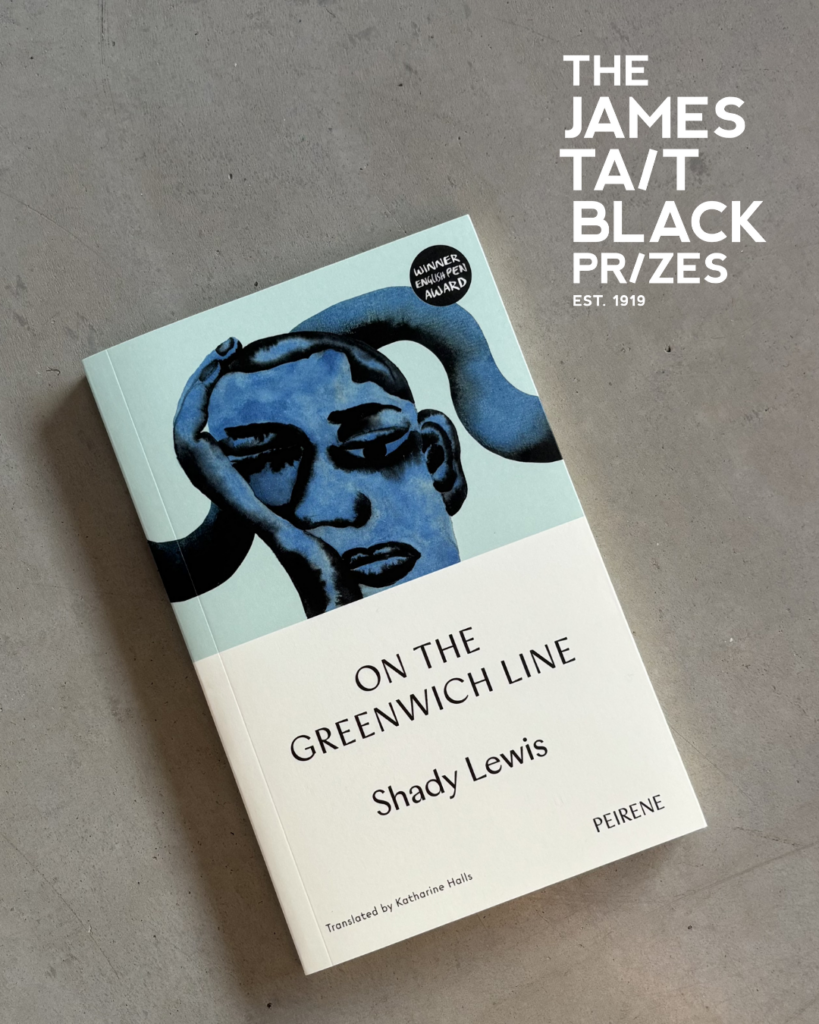
Statement from Shady and Katharine:
‘It is a great honour to have won the James Tait Black Prize for Fiction, and particularly to be only the third work of translation ever to win the UK’s oldest literary award. We would like to thank the judges for this accolade and send our heartfelt congratulations to the other shortlistees.
However, we are saddened that this year’s edition of the prize has been overshadowed by the actions of the University of Edinburgh’s management and the ensuing strike. We fully support the striking UCU members, including the judges of the prizes, who are taking action to defend the livelihoods and wellbeing of staff at the university, their students’ access to an excellent education, and the quality of research at the University.
Their strike matters to us because universities are not only places of teaching and research, but also play a vital role in the UK’s cultural life more broadly, as the century-long history of the James Tait Black prizes goes to show.’
Statement from the lead judges:
‘The panel praised the book’s sensitive yet subversive portrayal of immigrant life in London and the banal cruelty of the British state’s treatment of asylum seekers under austerity. We loved its distinctive narrative voice, which continually wrongfoots the reader’s assumptions, and were impressed by its skilful combination of British and Egyptian literary sensibilities, especially a shared affinity for the satirical and absurd. Lewis is a master of tone, shifting with apparent ease between the poignant and the comic, with the book’s mercurial qualities rendered capably into English in Halls’s wonderful translation.
This is a rare book, brave and brilliant, and we’re thrilled to be able to add it to our list of the best books published in the UK since 1919.’